Codex field map
Last researched: 2026-08-13
Learn Codex as a connected engineering system.
Choose the right surface, make verification part of the task, and turn repeated work into durable guidance—with every important claim linked to a dated source.
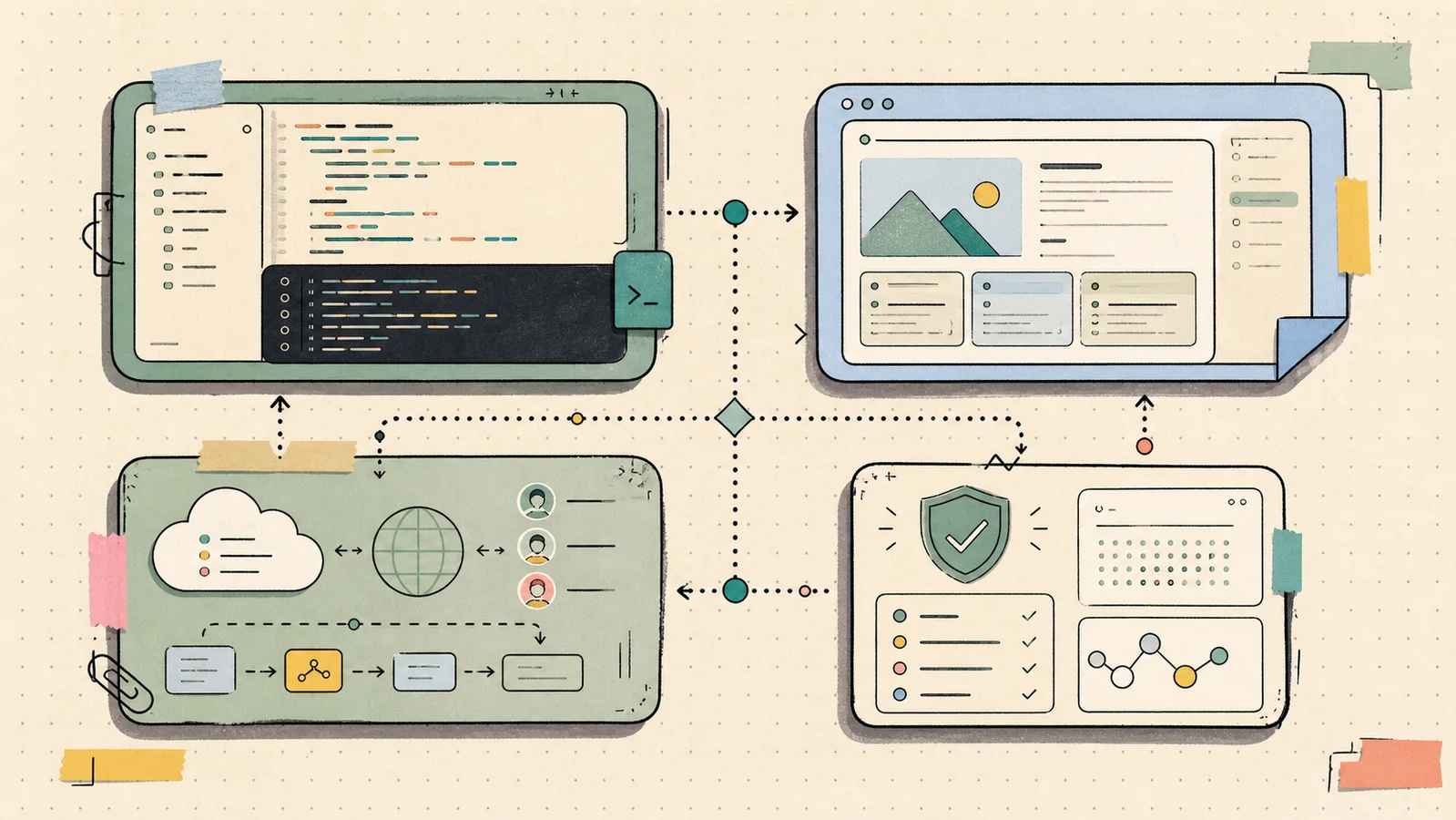
Installation & Setup
Get up and running in minutes
Copy the command for your preferred environment, authenticate, and configure repository guidance.
Command reference
Essential flags, slash commands, and shortcuts
Everyday commands for starting sessions, steering tasks, and inspecting progress.
Current briefing
Three changes worth acting on now
A small, dated layer for surface shifts, deadlines, and releases that change everyday Codex work.
Workflow recipes
Repeatable ways to use Codex well
Prompt shelf
Copy-paste starters with a finish line
Adapt the placeholders, keep the verification clauses, and avoid turning prompts into permanent policy.
Field library
Important Codex capabilities
Filter by job, then follow each record back to its current documentation.
Decision helper
Pick the right Codex surface
Start from the context the task needs, not from the tool you opened first.
Operating principles
A reliable way to think about Codex
Learning paths
Study Codex in practical layers
Field warnings
Patterns that quietly make Codex worse
Deep reference & archives
Explore timeline, comparison, and evidence desk
Comprehensive archive subpages designed for in-depth technical research.
Codex vs Claude Code
Compare operating models, surfaces, workflows, sandboxing, and security boundaries across 9 verified dimensions.
Open comparison matrix → Release History21-Item Chronological Timeline
Explore dated product milestones and separate production releases from GitHub implementation signals.
View full timeline → Evidence Desk24 Research Sources & Audit
Inspect primary OpenAI documentation, changelog records, and deterministic freshness states.
Inspect research inventory →